What “High-Value Engineering” Actually Means
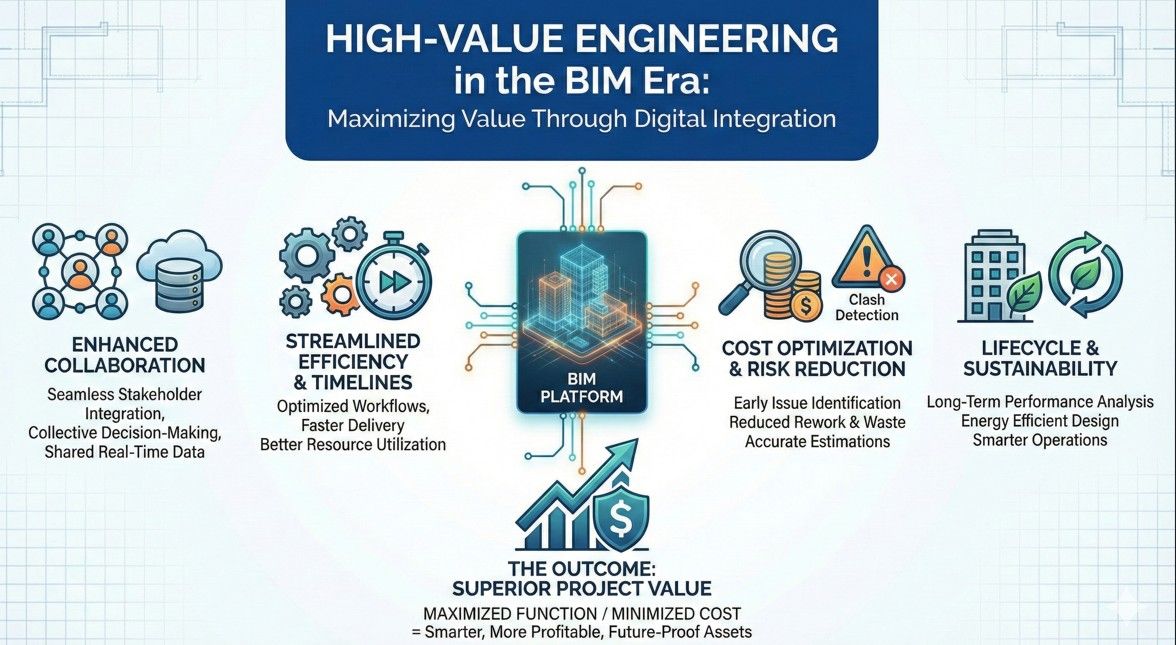
High-Value Engineering is defined by what changes for the client, not by headcount, billable hours, or drawings produced.
Core characteristics
-
Decision-grade engineering, not just documentation
-
Embedded constructability and cost logic (designs that can actually be built, priced, sequenced, and approved)
-
Digital continuity across 3D → 4D → 5D → 6D → 7D
-
Lifecycle accountability, extending beyond IFC drawings into construction, handover, and operations
In simple terms:
Low-value engineering answers “What should be drawn?”
High-value engineering answers “What should be built, when, how much it will really cost, and what will break later if we get this wrong.”
What It Can Be Compared With (and Why It’s Different)
| Model | Typical Outcome | Risk Profile | Cost Illusion |
|---|---|---|---|
| Low-cost drafting outsourcing (India, generic BIM shops) | Pretty models, poor coordination | High (rework, site clashes) | Cheap upfront, expensive later |
| Traditional consultants | Technically sound, siloed | Medium (coordination gaps) | Predictable but slow |
| Global EPC firms | End-to-end, heavyweight | Low risk, high inertia | Very expensive |
| High-Value Engineering (BIM Syncro) | Optimised, coordinated, execution-ready | Low | High ROI, controlled spend |
Think of it like this:
-
Cheap outsourcing is like buying a blueprint without checking the soil.
-
Traditional consultancy is like designing a car without simulating traffic.
-
High-Value Engineering is running the race in a simulator before the flag drops.
BIM Syncro as a High-Value Engineering Provider
1. BIM Beyond Visualization
What others do
-
3D models for compliance or tender visuals
What BIM Syncro does
-
3D models integrated with:
-
Clash detection (Navisworks)
-
Construction sequencing (4D)
-
Cost intelligence (5D)
-
Asset and FM handover logic (7D)
-
High-value effect
-
Reduced rework
-
Fewer site instructions
-
Faster authority approvals
2. Cost-Optimised Design
What others do
-
Design → QS prices → contractor “value engineers” later
What BIM Syncro does
-
Cost intelligence embedded during design
-
Alternative materials, systems, and sequencing tested digitally
-
Design options evaluated against CAPEX + OPEX
High-value effect
-
Lower lifecycle cost
-
Fewer late-stage redesigns
-
Developers defend budgets with data, not hope
3. Engineering Outsourcing That Is Not Headcount-Based
What outsourcing usually means
-
“Here’s 10 engineers at RM X per month”
What BIM Syncro means
-
Access to discipline-specific expertise:
-
Civil & structural
-
M&E
-
Infrastructure
-
Project controls
-
-
Scoped by deliverables and outcomes, not manpower
High-value effect
-
Scales capacity without bloating payroll
-
No long-term talent risk
-
Knowledge retained in models and data, not people’s heads
4. Regulatory-Aware Engineering
What most BIM vendors ignore
-
Local authority logic
-
Submission workflows
-
Independent checking requirements
What BIM Syncro integrates
-
Regulatory Approval (RA) consultancy
-
Independent Checking Engineer capability
-
Models and calculations aligned to Malaysian codes and agency expectations
High-value effect
-
Faster approvals
-
Fewer resubmissions
-
Reduced political and compliance friction
5. Digital Twin as an Operational Asset
What “digital twin” often is
-
A static 3D model with a fancy label
What BIM Syncro positions
-
BIM models that evolve into:
-
As-built digital twins
-
FM-ready datasets
-
Asset lifecycle references
-
High-value effect
-
Owners inherit intelligence, not PDFs
-
Maintenance, retrofits, and audits become cheaper and faster
Why This Matters to Global Projects
For international developers, EPCs, and GLCs:
-
BIM Syncro acts as a local high-value engineering nucleus
-
Global standards are maintained
-
Local realities are respected
-
Costs are optimised without cultural or regulatory blind spots
This is exactly why high-value engineering outsourcing works:
You offshore execution without offshoring judgment.
Bottom Line
High-Value Engineering is not about being cheaper.
It’s about being wrong fewer times—and discovering those mistakes digitally, early, and cheaply.
BIM Syncro’s positioning shows:
-
Engineering with consequence
-
BIM with operational intent
-
Outsourcing without strategic dilution
That’s why it belongs in the high-value category—and why comparing it to drafting houses or generic BIM vendors completely misses the point.
References & Further Reading
-
Building Information Modelling (ISO 19650 overview): https://www.iso.org/standard/68078.html
-
McKinsey on BIM value creation: https://www.mckinsey.com/industries/capital-projects-and-infrastructure/our-insights/the-value-of-bim-for-infrastructure-projects
Conclusion
If engineering doesn’t change decisions, reduce risk, or improve lifecycle economics, it’s overhead.
High-Value Engineering—done properly, as BIM Syncro positions it—is leverage.
Recommended Post
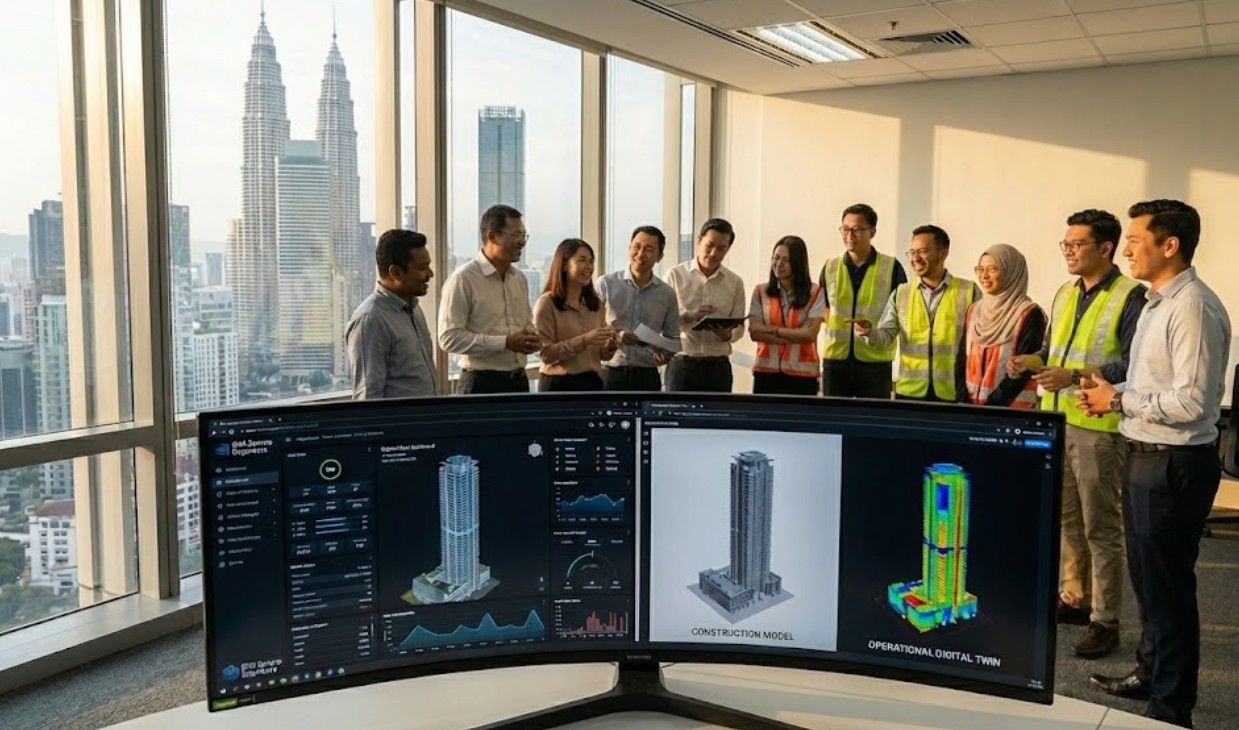
Beyond the 3D Model: Pivoting to "Day Two" Operational Intelligence

Delivering Digital Twins