Infrastructure, Civil & Environmental Engineering Delivered with BIM Intelligence

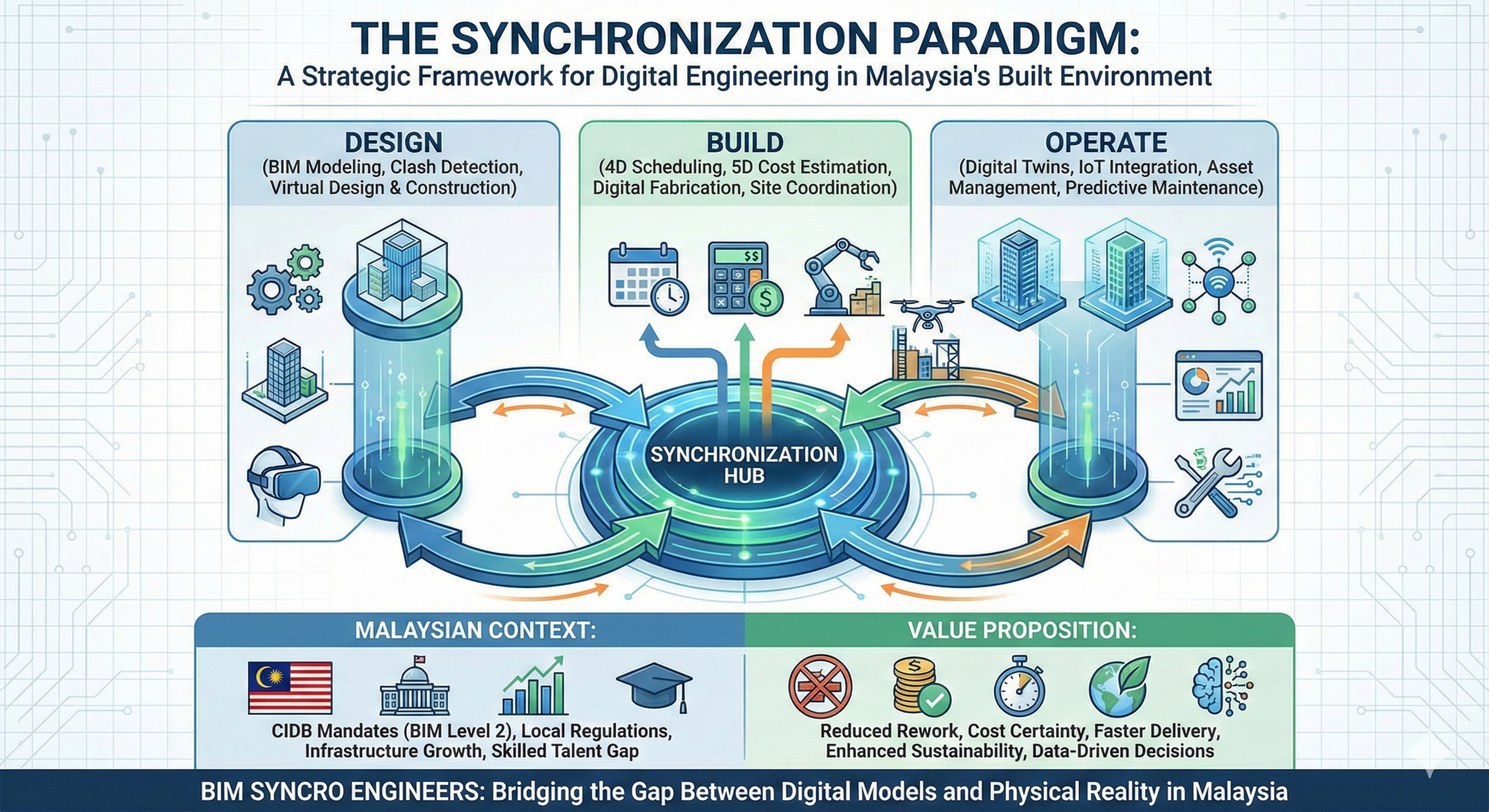
In Malaysia, many firms can offer civil, environmental, and BIM services. Fewer can integrate them coherently across design, approval, construction, and operations.
The average approach looks like this:
-
Civil engineers design in silos
-
Geotechnical inputs are treated as reports, not design drivers
-
BIM stops at 3D visuals or clash screenshots
-
Regulatory submissions are reactive and last-minute
-
Cost and constructability issues surface only on site
BIM Syncro was built specifically to avoid these failure modes.
1. Civil & Structural Engineering: Design That Survives Contact With Reality
What the average firm does
-
Designs to minimum code compliance
-
Optimises structure in isolation from construction methods
-
Hands off drawings and hopes for the best
How BIM Syncro does it better
-
Designs with constructability, sequencing, and ground conditions embedded from Day 1
-
Integrates civil, structural, drainage, and retaining systems into a single coordinated logic
-
Uses BIM-enabled quantities and constructability checks to prevent downstream surprises
Real-world impact
-
Fewer RFIs during construction
-
Lower rework due to coordination errors
-
Designs that contractors can actually build without improvisation
This is engineering that respects gravity, soil, budgets, and human behaviour — not just software outputs.
2. Environmental & Geotechnical Solutions: From Compliance to Control
What the average firm does
-
Treats ESCP, stormwater, and soil reports as approval paperwork
-
Separates geotechnical analysis from design optimisation
-
Over-designs “to be safe,” inflating costs
How BIM Syncro does it better
-
Integrates soil behaviour, slope stability, stormwater flow, and erosion control directly into the design model
-
Uses simulation tools (e.g. PCSWMM, Plaxis-class logic) to test real scenarios, not assumptions
-
Aligns environmental controls with construction staging — not just final layouts
Real-world impact
-
Faster approvals with fewer resubmissions
-
Reduced earthworks and mitigation costs
-
Lower long-term maintenance risks
In short: environmental compliance becomes engineering intelligence, not a bureaucratic tax.
3. BIM for Infrastructure: BIM That Thinks Beyond 3D
What the average firm does
-
Produces 3D models for coordination meetings
-
Runs clash detection as a one-off exercise
-
Stops BIM at handover
How BIM Syncro does it better
-
Uses BIM as a decision platform, not a presentation layer
-
Delivers:
-
Cut-and-fill optimisation tied to real terrain
-
4D sequencing aligned with construction logic
-
5D cost intelligence linked to quantities
-
Digital-twin-ready models for roads, ports, and utilities
-
Real-world impact
-
Better tender accuracy
-
Fewer site delays due to sequencing conflicts
-
Assets that transition cleanly into operations and maintenance
If BIM stops at 3D, you bought a sports car and never left first gear. BIM Syncro takes clients all the way.
4. Project & Regulatory Support: Approval Is a System, Not a Gamble
What the average firm does
-
Treats approvals as an external problem
-
Submits technically correct but poorly coordinated documents
-
Reacts to authority comments instead of anticipating them
How BIM Syncro does it better
-
Designs with regulatory logic in mind, not after the fact
-
Aligns drawings, reports, BIM outputs, and calculations into a coherent submission set
-
Provides independent technical reviews to de-risk decisions before they become expensive
Real-world impact
-
Shorter approval cycles
-
Fewer redesign loops
-
Higher confidence for clients, boards, and financiers
This is especially critical for infrastructure projects where delays translate directly into political, financial, and reputational costs.
What Truly Sets BIM Syncro Apart
Across all four service pillars, BIM Syncro differentiates itself by:
-
Engineering depth before software polish
-
Integration across disciplines, not handoffs
-
Cost and constructability awareness embedded early
-
Malaysian regulatory, ground, and construction realism
-
BIM as an operational intelligence layer, not a marketing artifact
Most firms can model.
Fewer can think systemically.
Very few can deliver outcomes consistently.
Conclusion
BIM Syncro does not compete by being louder or flashier than the average firm. It competes by being more grounded, more integrated, and more honest about how infrastructure actually gets built, approved, and operated.
That difference shows up where it matters most:
-
On site
-
In budgets
-
In approvals
-
In long-term asset performance
Average firms draw projects.
BIM Syncro delivers infrastructure that works.
Recommended Post

How To Unlock Predictive Intelligence for Operations and Design
BIM Compliance Malaysia